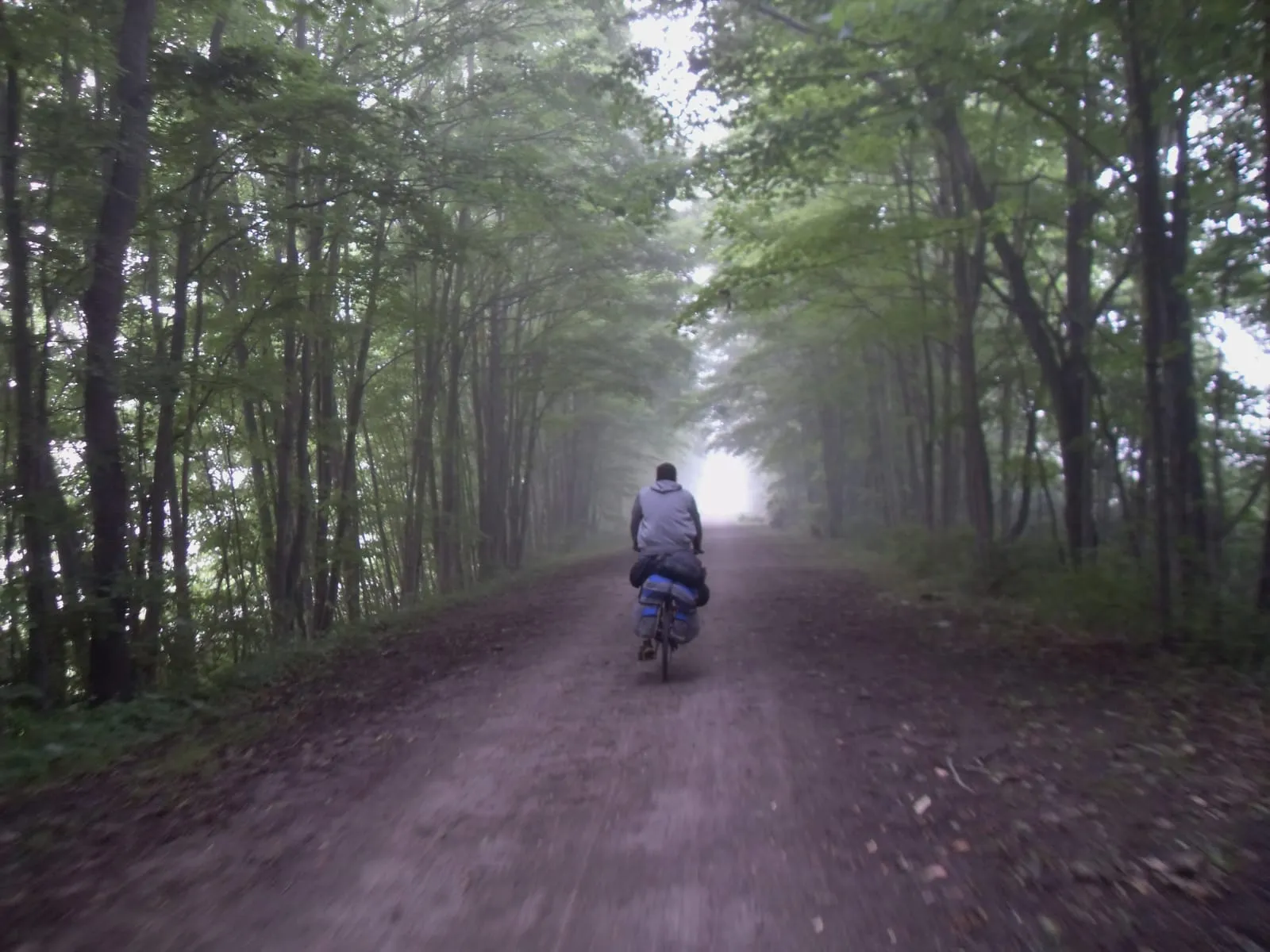

Pennsylvania doesn’t charge you to walk into a state park, and it has a lot of them, plus millions of acres of state forest. That makes it one of the easiest states to exercise in for free, as long as you know two seasonal facts. In winter, the parks stay open, and some offer skiing, snowshoeing and sledding when conditions allow. In fall and spring, hunters share the woods, and on state game lands hikers have to wear orange and recreational biking and horseback riding are off limits.
At a glance
- State park entry
- No entrance fee [2]
- State parks
- 125 parks, 300,000+ acres [2]
- State forest
- 2.2 million acres [3]
- Great Allegheny Passage
- 150 miles, Pittsburgh to Cumberland, Md. [5]
- Orange on game lands
- Oct. 1 to Jan. 31 and April 20 to May 31 [4]
- Biking and horseback riding on game lands
- Not allowed Oct. 1 to Jan. 31 and April 20 to May 31, unless hunting, trapping or fishing [4][10]
What you’re working toward
The federal Physical Activity Guidelines recommend at least 150 to 300 minutes of moderate aerobic activity a week, like brisk walking, plus muscle-strengthening activity on at least two days [1].
State parks and forests: no gate fee
The Department of Conservation and Natural Resources (DCNR) states it plainly: “Pennsylvania state parks do not charge an entrance fee.” Its Bureau of State Parks manages 125 parks covering more than 300,000 acres [2]. Add the 2.2 million acres of state forest DCNR also manages, and that’s a lot of public land to explore [3]. Camping, cabins and some activities cost extra.
Trails are the obvious use: walking, trail running and hiking.
Winter in the parks
Pennsylvania’s state parks don’t close for the cold. DCNR lists cross-country skiing, downhill skiing, sledding, ice skating, snowmobiling and snowshoeing among the things to do in state parks [2]. Not every park offers every activity, and all of them depend on snow and ice: DCNR’s park listings describe skiing “with proper snow conditions” or “when snow conditions allow” [9]. Where there’s snow, skiing and snowshoeing on a park’s own trails is a full-body winter workout, and there’s no fee to get in. Some groomed cross-country ski trails do charge: at the ski touring concession at Laurel Ridge State Park, which also serves nearby Kooser State Park, DCNR says “a trail fee is required” [9]. Check each park’s page for conditions, whether trails are groomed and whether there’s a trail fee before you go.
Dress in layers and keep your hands, ears and face covered on windy days. If it’s icy, take the day indoors.
The orange rule on state game lands
This is the rule that catches many hikers. State game lands are open to the public, but they’re managed for hunting, and the Pennsylvania Game Commission requires non-hunters to be visible during the main seasons [4].
| When | What to wear |
|---|---|
| October 1 through January 31 | A fluorescent orange hat, or 250 square inches of fluorescent orange on the head, chest and back combined, visible from 360 degrees |
| April 20 through May 31 | Same as above |
Cyclists and horseback riders have a stricter rule. During the same two periods, October 1 through January 31 and April 20 through May 31, riding a nonmotorized vehicle, conveyance or animal on state game lands is prohibited unless you are lawfully hunting, trapping or fishing [10]. That covers bicycles and horses. Riding used to be allowed on Sundays inside those periods; the Game Commission ended that exception in 2026, and the change took effect July 1, 2026 [4][10]. The rest of the year, riding is limited to roads normally open to public travel and designated routes as posted [10].
State parks and state forests are separate from game lands and have their own rules. Bright orange is still a sensible choice for any fall hike in the woods.
The Great Allegheny Passage
The GAP is a 150-mile nonmotorized trail from downtown Pittsburgh to Cumberland, Maryland. Its crushed-limestone surface has mostly gentle grades that suit walkers, runners and cyclists [5]. The exception is the east end: from Cumberland the trail makes a long, gradual climb to the Eastern Continental Divide, its high point at 2,392 feet, so that stretch is harder heading west [5][11]. Western Pennsylvanians can join it right in the city or at towns along the route and do an out-and-back of any length. The Great Allegheny Passage Conservancy’s site doesn’t list a fee to use the trail.
Philadelphia: the Wissahickon and senior centers
Wissahickon Valley Park. Philadelphia’s 2,000-acre Wissahickon Valley Park has about 50 miles of trails, and parking at its entrances is free, according to the Friends of the Wissahickon [6]. Forbidden Drive, its wide gravel road along the creek, is the easy, wheelchair-accessible option [6].
Older adult centers. Philadelphia Parks & Recreation runs six older adult centers for people 55 and older. Their exercise and health programs include aerobics, tai chi, yoga, strength training, walking groups and chair exercises [7]. The city’s page doesn’t list costs, so ask the center you’d like to join.
Pittsburgh: Healthy Active Living centers
Pittsburgh’s Citiparks runs 12 Healthy Active Living centers, open year-round Monday through Friday, for people 60 and older [8]. Activities include shuffleboard, bocce, horseshoes and Wii bowling, plus exercise and tai chi classes offered with the Community College of Allegheny County [8]. The city doesn’t post fees on that page, so check with your nearest center.
Before you sign up at a senior or rec center
A few questions save surprises later:
- Is there a membership or class fee, and is it monthly or yearly?
- Do I need to live in the city, or bring an ID or proof of age?
- Which days and hours is the fitness room or class open?
- Is there an instructor, or is it open use?
- Can I try a class once before I commit?
A year-round plan for Pennsylvania
- Spring: state park trails, the GAP and city parks. On game lands, wear orange from April 20 to May 31, and no recreational biking or horseback riding there in that period [4][10].
- Summer: go early in the day for walks and rides, and ease off on the hottest afternoons.
- Fall: prime trail season. Orange on game lands starts October 1, and recreational biking and horseback riding there stop until after January 31 [4][10].
- Winter: cross-country skiing and snowshoeing in state parks when there’s enough snow [2][9]. Watch for ice and short days.
Fill in the rest with two short strength sessions a week at home or at a senior or recreation center, and you’ll meet the federal guidelines without a gym bill [1].
Gear that helps
You don’t need equipment for any of the workouts above. If you want a little help, these are inexpensive and widely used. We chose them from the makers’ listings; we haven’t tested them ourselves.
Best for: Strength work at home or in a park
Fit Simplify Resistance Loop Exercise Bands, Set of 5
Five color-coded 12-inch loop bands, from extra light to extra heavy, that add resistance to squats, bridges and arm work at home or in a park, and fold into the included carry bag. [12]
- 5 bands, 5 resistance levels (extra light to extra heavy) [12]
- 12-inch loops [12]
- Carry bag and illustrated exercise guide included [12]
- Made of latex [12]
Watch out: Latex: skip these if you have a latex allergy.
See it on Amazon → We chose it from specs and safety records; we haven't tested it ourselves.
Best for: Floor exercises and stretching
Amazon Basics 1/2-Inch Extra Thick Exercise Yoga Mat with Carrying Strap
A thick foam mat that cushions knees and wrists for floor exercises, stretching and core work on a hard floor or in the grass, with a strap to carry it to the park. [13]
- 1/2 inch thick NBR foam [13]
- About 74 x 24 inches [13]
- Elastic carrying strap [13]
- Hand wash only [13]
Watch out: Thick and soft, so it is less stable for balance-heavy yoga poses.
See it on Amazon → We chose it from specs and safety records; we haven't tested it ourselves.
Best for: Early-morning and evening walks and runs
Amphipod Xinglet Reflective Sash (Hi-Viz)
A light, adjustable reflective sash that makes you easier for drivers to see on early-morning and evening walks, runs and bike rides. [14]
- Cross-body design, reflective all the way around [14]
- Two pads for clip-on LED lights (lights not included) [14]
- Adjusts from XS to XL [14]
- Quick-release buckle [14]
Watch out: Reflective only: add a clip-on light if you walk or run where there are no streetlights.
See it on Amazon → We chose it from specs and safety records; we haven't tested it ourselves.
Sources
- U.S. Office of Disease Prevention and Health Promotion: Top 10 Things to Know About the Physical Activity Guidelines
- Pennsylvania DCNR: State Parks
- Pennsylvania DCNR: DCNR encourages Pennsylvanians to explore state parks and forests (March 21, 2025)
- Pennsylvania Game Commission: Highlights from today's Commissioners meeting (April 11, 2026)
- Great Allegheny Passage Conservancy: About the GAP
- Friends of the Wissahickon: FAQ
- City of Philadelphia: Programs for older adults
- City of Pittsburgh: Healthy Active Living
- Pennsylvania DCNR: Where to Cross-Country Ski in Pennsylvania State Parks
- Pennsylvania Code, 58 Pa. Code § 135.41: State game lands (amended May 29, 2026, effective July 1, 2026)
- Allegany County, Maryland: GAP Trail
- Amazon listing: Fit Simplify Resistance Loop Exercise Bands, Set of 5
- Amazon listing: Amazon Basics 1/2-Inch Extra Thick Exercise Yoga Mat with Carrying Strap
- Amazon listing: Amphipod Xinglet Reflective Sash (Hi-Viz)
Common questions
Do Pennsylvania state parks charge an entrance fee?
No. DCNR says Pennsylvania state parks do not charge an entrance fee. Camping, cabins and some activities have their own fees.
Do hikers have to wear orange on Pennsylvania state game lands?
Yes, during set dates. From October 1 through January 31 and from April 20 through May 31, people using state game lands for anything other than hunting, trapping or fishing must wear a fluorescent orange hat or 250 square inches of fluorescent orange on the head, chest and back combined, visible from all sides.
Can I ride a bike or a horse on Pennsylvania state game lands?
Not during the main hunting periods. From October 1 through January 31 and from April 20 through May 31, riding a bicycle, another nonmotorized vehicle or an animal on state game lands is prohibited unless you are lawfully hunting, trapping or fishing. Outside those dates, riding is limited to roads normally open to public travel and designated routes as posted.
How long is the Great Allegheny Passage?
150 miles, from downtown Pittsburgh to Cumberland, Maryland, on a crushed-limestone surface. Grades are mostly gentle, with a long, gradual climb from Cumberland up to the Eastern Continental Divide.
Are there free exercise programs for seniors in Philadelphia and Pittsburgh?
Both cities run centers for older adults with exercise programs. Philadelphia Parks & Recreation has six older adult centers for people 55 and up, and Pittsburgh's Citiparks runs 12 Healthy Active Living centers for people 60 and older. Ask each center about any fees.