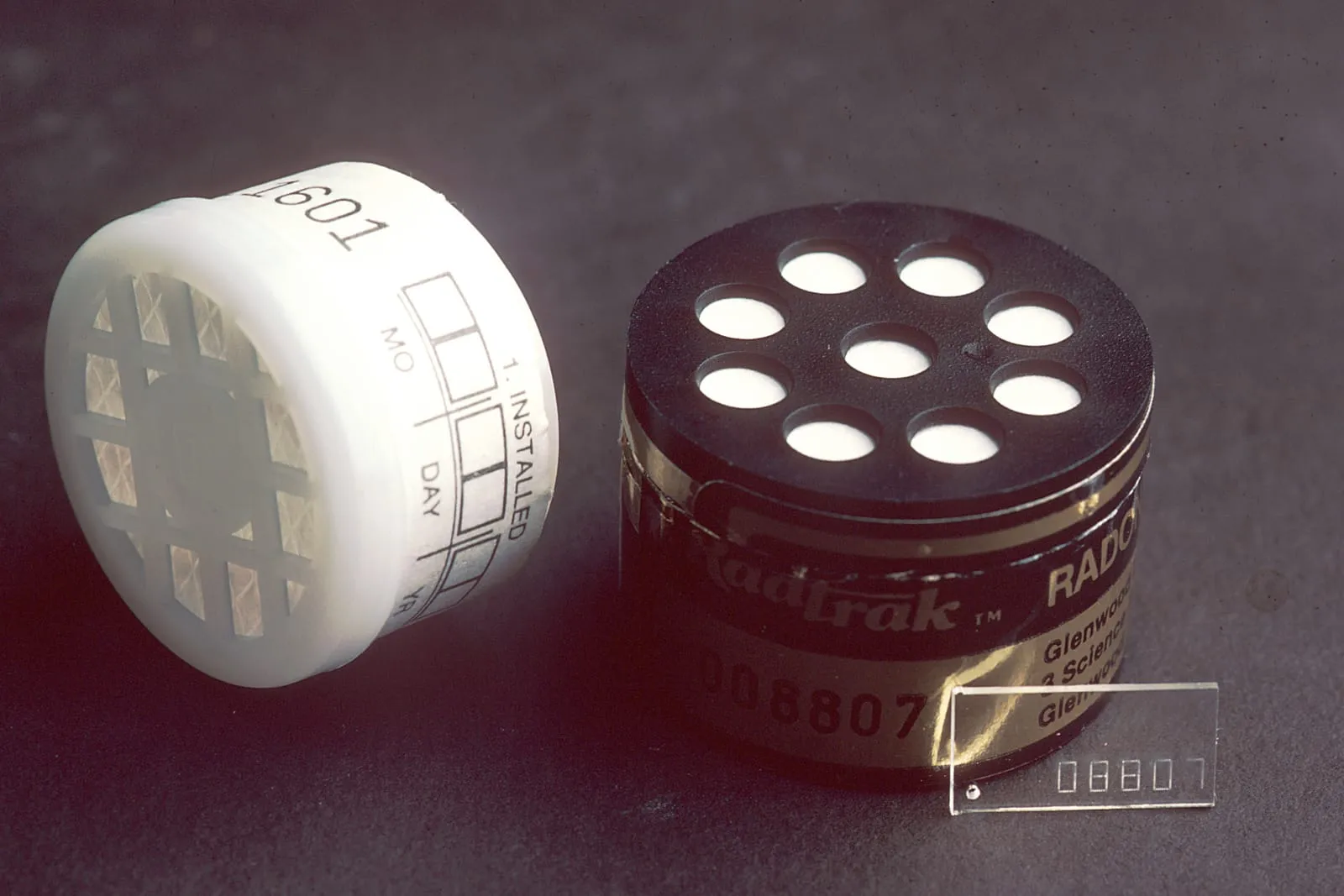

Quick answer: start with a lab test kit. A long-term alpha-track kit from AccuStar gives the best picture of your year-round level, and AccuStar Labs is on Pennsylvania’s certified lab list. If you want ongoing readings after that, or after a mitigation system goes in, a digital monitor like the Airthings Corentium Home 2 or Ecosense RadonEye RD200 shows levels day by day.
Radon is a radioactive gas from the ground that you can’t see or smell. Pennsylvania’s Department of Environmental Protection (DEP) estimates that about 40% of Pennsylvania homes have levels above the EPA’s action level of 4.0 pCi/L [1]. Nationally, the EPA estimates radon causes about 21,000 lung cancer deaths a year and is the leading cause of lung cancer among people who have never smoked [2].
Why it matters in Pennsylvania
How we chose
- Pennsylvania-certified labs. DEP says radon kits are analyzed by Pennsylvania-certified labs [1]. For lab kits, we checked the lab against DEP’s list of certified laboratory firms (August 3, 2026) [4]. AccuStar Labs is on it. We left out a popular hardware-store kit because we couldn’t confirm its lab on DEP’s list.
- The CDC’s testing steps. Short-term tests run 2 to 90 days; long-term tests run more than 90 days and show a year-round average. A high short-term result should be followed by a second test [3]. Our lab kit pick is a long-term test.
- Digital monitors with published specs. For monitors, we used the makers’ own spec sheets for sensor range and battery life.
- Recall check. We searched the CPSC recall database on November 2, 2026, and found no recalls for any radon test product [8].
Our picks
Best for: Your home's year-round average
AccuStar Alpha Track Long-Term Radon Test Kit
A long-term test gives the yearly average the CDC uses to decide whether to fix, and lab analysis is included. AccuStar Labs appears on DEP's certified laboratory list.
- For long-term measurements lasting 91 days to 1 year [7]
- Laboratory analysis and instructions included [7]
- AccuStar Labs listed as a Pennsylvania-certified laboratory firm [4]
Safety check: A passive detector with no power source. CPSC recall search found no AccuStar or radon test kit recall (checked 2026-11-02).
Watch out: You wait at least three months for a result. The maker's page doesn't say whether return postage is included.
See it on Amazon → We chose it from specs and safety records; we haven't tested it ourselves.
Best for: Ongoing readings without a subscription
Airthings Corentium Home 2 Digital Radon Detector
A battery-powered monitor with a screen that shows 24-hour, 7-day, 30-day and long-term averages, so you can watch levels change through the seasons or after mitigation.
- Radon, temperature and humidity sensors [5]
- Radon range 0 to 250 pCi/L; samples every 60 minutes [5]
- 2 AA batteries included; up to 3 years unconnected [5]
- Works without an app; Bluetooth optional [5]
- Free 5-year warranty if registered within 30 days [5]
Safety check: Battery-powered, for indoor use only. CPSC recall search found no Airthings recall (checked 2026-11-02).
Watch out: It isn't a Pennsylvania-certified lab test, so it won't stand in for a DEP-certified tester in a home sale. Humidity above 85% can damage the sensor.
See it on Amazon → We chose it from specs and safety records; we haven't tested it ourselves.
Best for: Seeing hour-by-hour changes on your phone
Ecosense RadonEye RD200
Its display updates every 10 minutes with an hourly average, and the app stores hourly data you can export, which helps you see how levels change day to night.
- Sensitivity 30 counts per hour per 1 pCi/L [6]
- Measurement range 0.2 to 99.9 pCi/L [6]
- Bluetooth app for iOS and Android; data export as .txt [6]
- Expected service life of 5 years [6]
Safety check: Ecosense's FAQ doesn't list a safety certification. CPSC recall search found no Ecosense recall (checked 2026-11-02).
Watch out: It's a consumer monitor, not a certified professional device. Operating range tops out at 80% relative humidity, so damp basements can be a problem.
See it on Amazon → We chose it from specs and safety records; we haven't tested it ourselves.
Buying guide
- Lab kit first, monitor second. A lab kit gives a measured result you can act on. A monitor is most useful for watching levels over time.
- Place it right. The CDC says to test in the basement or the lowest level of your home, about three feet off the floor in the middle of the room [3].
- Test in winter with the house closed. DEP says the colder months are the best time in Pennsylvania [1].
- Retest after a fix. The CDC says to retest a few months after mitigation to make sure levels dropped [3].
- Check certifications. For a lab kit, look up the lab on DEP’s certified list [4]. For a professional tester or mitigation contractor, use DEP’s list of state-certified firms, on its website or by phone at 1-800-23-RADON [1].
Sources
- Pennsylvania DEP: DEP Encourages Pennsylvanians to Test Their Homes for Radon During Radon Action Month (Jan. 12, 2026)
- U.S. EPA: Health Risk of Radon
- CDC: Testing for Radon in Your Home
- Pennsylvania DEP: List of Certified Laboratory Firms (Aug. 3, 2026)
- Airthings: Corentium Home 2 Product Sheet (Version C, June 2025)
- Ecosense: RadonEye RD200 Frequently Asked Questions
- RadonAway (AccuStar): Alpha Track Long-Term Radon in Air Test
- U.S. Consumer Product Safety Commission: Recalls database (searched Nov. 2, 2026)
Common questions
How common is radon in Pennsylvania?
Pennsylvania's Department of Environmental Protection says about 40% of the state's homes have radon above the EPA action level of 4.0 picocuries per liter (pCi/L). The only way to know your home's level is to test.
When is the best time to test for radon in Pennsylvania?
DEP says the colder months, when windows and doors are closed and radon can build up indoors. Test on the lowest level of the home that's lived in or used.
What do I do if my radon test is 4 pCi/L or higher?
The CDC says to test again, with either a short-term or long-term test. If the average of two short-term tests, or any long-term test, is 4 pCi/L or more, hire a professional. In Pennsylvania, DEP says a permanent mitigation system costs about $800 to $1,200, and it keeps a list of state-certified contractors (1-800-23-RADON).